Teaching Resources
Sermons, studies, devotionals, and articles to deepen your faith
Categories
All Teaching

# In-Depth Seminar Briefing Document on Biblical Exegesis, Spiritual Life, and Church Building --- This document serves as a comprehensive briefing for in-depth discussions on three interconnected areas of Christian faith and practice: biblical exegesis, the cultivation of spiritual life, and the strategic building and development of the church community. The seminar aims to facilitate scholarly discourse, practical application, and spiritual formation across these essential dimensions of Christian ministry and discipleship.
# Presentation Document Overview This briefing document aims to systematically organize the core perspectives, theological reflections, spiritual practices, and church applications discussed in the seminar. The entire text develops around the hermeneutical principle of…

# John Chapter 4 Bible Study and Spiritual Devotion --- This passage presents one of the most profound encounters in Scripture—Jesus meeting the Samaritan woman at the well. It reveals the heart of Jesus toward those considered outcasts and demonstrates His power to transform lives through grace and truth. The account begins with Jesus traveling through Samaria, deliberately breaking cultural and social boundaries of His time. At Jacob's well, He encounters a woman who comes to draw water at midday—unusual timing that suggests her isolation from the community. Through their conversation, Jesus reveals His knowledge of her past and His identity as the Messiah, offering her "living water" that becomes within us "a spring of water welling up to eternal life." This chapter challenges us to examine our own barriers—whether social, cultural, or personal—that might prevent us from encountering Christ authentically. The woman's response, leaving her water jar and becoming a witness to her entire village, exemplifies what true encounter with Jesus produces: a transformed heart eager to share the good news with others. As we meditate on this passage, we are invited to recognize that Jesus seeks us out with the same intentionality He showed toward this forgotten woman. No one is too broken, too sinful, or too far removed for the reach of His grace.
The Bible study conference centered on John chapter 4, delving deeply into two key narratives: Jesus's conversation with the Samaritan woman at Jacob's well, and Jesus's remote healing of the official's son. Participants, through comparing John chapter 3 (Nicodemus) with chapter…

聖靈的洗與生命的重生
這份文件彙整了關於屬靈成長與聖經詮釋的深度論述。核心論點指出,進入神的國必須經歷「從水和聖靈而生」的重生,而非僅僅停留在儀式性的水洗。透過分析羅馬書第六至八章與第十二章,探討了聖靈如何帶領信徒脫離罪與律法的束縛,進而成為「屬靈人」。此外,文中特別強調了中文文字在傳達聖經真理上的獨特性,以及信徒在困境中(如疾病、迫害)如何藉由緊緊跟隨神來獲得內在的自由與力量。

聖靈引導下的聖經真理與生命實踐
本簡報旨在總結「meeting.mp3」會議記錄中的核心內容,深入分析關於聖經領受、聖靈的工作、罪的本質以及基督徒在現代生活中的實踐挑戰。會議強調,屬靈的事務無法依靠人的聰明智慧領受,必須完全依賴聖靈的啟迪。透過探討《羅馬書》的教義與具體的生活見證(如職場壓力處理與教堂購置過程),會議闡明了「將身體獻上當作活祭」的實際意義,並呼籲信徒建立以屬靈生活為優先的生活秩序。

道成肉身與聖靈中的喜樂
本簡報旨在彙整關於《約翰福音》核心教義、聖靈生命以及信徒屬靈實踐的深度研討內容。研討的核心在於區分「肉體之生」與「聖靈之生」,並透過耶穌基督所彰顯的「恩典」與「真理」,探討信徒如何從罪中得自由、在基督裡獲得真正的喜樂。

屬靈生命與教會實務:聖經研讀、禱告與門徒訓練分析
本文件彙整自「meeting.mp3」會議記錄之核心內容。該會議由一位長老主講,旨在深入探討基督徒在當前混亂世界(特別是矽谷等快節奏地區)中,如何透過聖經研讀、恆切禱告以及順服聖靈的引領,從「屬地的教徒」轉變為「屬天的門徒」。

靈性覺醒與聖經領受
本次會議探討了信徒在信仰生活中的核心挑戰:如何在軟弱中禱告、如何真實領受聖經真理,以及如何在現實困境中保持屬靈的喜樂。核心論點指出,信徒往往因不熟悉聖經或僅停留於知識層面,導致生命缺乏動力。會議強調,必須藉著聖靈的啟示來「開啟心竅」,如同耶穌在前往以馬忤斯的路上為門徒講解聖經一樣,使心靈重新火熱。此外,會議也對當代教會過於強調學位與專業技能,而忽略屬靈恩賜與聖靈工作的現象提出了反思。

屬靈生命成長與聖經真理實踐
這份報告匯整了會議中關於屬靈操練的核心見解。重點在於區分「聽見」與「領受」的差異,強調「領受」包含深度的思考與行為的實踐。會議探討了信徒在現代生活(特別是在忙碌的工作環境中)如何將身體獻上作為「活祭」,將生活主權移交給神。此外,文件深入分析了《約翰福音》第二章「水變為酒」的神蹟,將其詮釋為從律法虛空到基督豐盛生命的轉化過程。

念聽遵行:回歸聖經真道
這份簡報的核心探討了基督徒與聖經話語的關係。會議指出,當代基督徒往往過度依賴「神學」與學術化的工作坊,而忽視了直接閱讀與領受聖經話語的重要性。文件強調了屬靈生命成長的三個核心環節:念(閱讀)、領受(理解與接受)與遵行(實踐)。
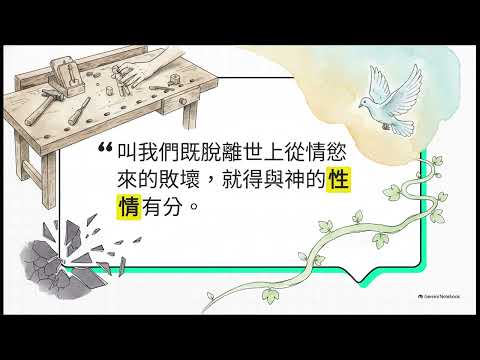
主門徒的生命傳承與性情養成
本次會議探討了基督徒生命建造的多個維度。核心論點指出,門徒訓練的本質是「生命的傳承」與「性情的契合」,而非單純的知識灌輸。會議強調,信徒必須主動「住在主裡面」,並透過聖靈的啟示來認識真理。同時,討論中也反思了教會在歷史試煉(如文革時期)下的信仰堅持,以及當前教會在講台教導與權威行使上面臨的挑戰,呼籲回歸以基督為中心的聖經啟示。

聖靈啟示與查經生活之道
本研討核心環繞著「領受」與「重生」的主題。討論指出,理解聖經不僅是文字的閱讀,更必須依賴聖靈的啟示,因為屬靈的事物(天上的事)無法單憑人類的理性或地上的知識來完全掌握。會議中重點分析了尼哥底母與耶穌關於「從水和聖靈生」的對話,並延伸探討了但以理與大衛的禱告榜樣。同時,討論也坦誠地反思了現代生活(特別是在美國背景下)對於維持固定禱告與靈修生活的挑戰,強調了信徒在軟弱中需要聖靈的代求與扶持。

靠著聖靈每日成聖的生命操練
本次會議核心環繞著「將身體獻上當作活祭」的信仰實踐。會議強調,成聖並非一蹴而就的瞬間轉變,而是一個持續一生的、依靠聖靈與肉體情欲爭戰的過程。透過研讀聖經、恆切禱告與每日的自我省察,信徒方能從「稱義」邁向「成聖」。此外,會議亦針對教會內部對初信者的教導方式進行了反思,主張應回歸聖經真理的啟示,而非僅僅停留在學術性或技術性的字句拆解。

中道與主門徒的生命建造
會議核心聚焦於教會轉型的必要性:從傳統「以人數為導向」的模式,轉向「以生命建造為核心」的門徒模式。與會者一致認為,長老與同工之間的「同心」是推動教會發展的前提。探討內容涵蓋了對門徒定義的重新審視、肢體配合的原則、聖靈工作的深度理解,以及如何將屬靈恩賜有效地整合於教會服務(如主日學、探訪工作)中。

靈命重生與神國真理的交通分享
本會議紀錄呈現了一場關於基督徒生命核心真理的深度交通。核心議題環繞著「重生」的定義與實踐,強調重生不僅是理論上的教條,更是聖靈在生命中的實際動工。討論中指出,進神國的關鍵在於透過水和聖靈而生,並將這種轉變描述為從「屬地的生存(Human Being)」提升至「屬天的生命(Heavenly Being)」。此外,會議亦探討了認罪的必要性、聖靈中喜樂的醫治能力,以及將聖經視為「庫房」以供應他人生命的屬靈職責。

從重生到榮光:聖靈裡的讀經與生命領受
本次研討核心圍繞著「領受」神的話語,而非僅僅是「閱讀」聖經。討論指出,認識耶穌不能停留在「拉比」(老師)的層次,而必須認其為從天而降、萬有之上的神。重點議題包括:

從頭腦到心靈:聖經應用的轉化之旅
本文件探討了理解神話語的本質性挑戰,強調「屬靈的事」必須透過「聖靈的指教」而非僅憑人的智慧或語言翻譯來領悟。核心主題圍繞著神性中「公義與慈愛」的融合,說明基督的十字架如何滿足神的公義並釋放其慈愛。此外,文件針對教會現況提出警示:信徒對於神的話語往往「聽而不受」;在家庭教育上,過度依賴專業工人之弊,應回歸父母作為屬靈教育首要責任人的聖經原則。最後,針對禱告生活與教會服事,提出應追求誠實與靈裡自由的洞見。

讀經的領悟:快讀、細讀與聖靈的啟示
本次交流探討了聖經研讀的深度(細讀)與廣度(快讀)之必要性,強調四福音書與啟示錄的整合理解。討論核心圍繞著「耶穌基督是神的兒子」這一中心思想,並區分了屬靈喜樂與世俗快樂的本質不同。講者對現代心理學忽視罪的觀念提出批評,並透過個人的患難經歷(如住院與誤入警局的過程),闡述了罪、死亡與復原的屬靈意義。此外,會議也對當代教會趨向世俗化組織、硬性規定退休年齡等現象提出了反思。

# The Shepherd and the Scholar: A Tale of Two Kings
This document aims to consolidate key arguments concerning spiritual growth and the practice of biblical truth in Christian life. Based on conference records, this analysis indicates that the strength or weakness of a Christian's spiritual life depends upon the degree of…

# Is It a Chore or a Conversation? A New Way to Read the Bible
This briefing aims to consolidate in-depth observations regarding the spiritual condition of believers in modern churches, difficulties in Bible reading, workplace testimonies, and church governance models. The core thesis points out that churches today commonly face a crisis of…

# God Made Flesh: Understanding the Invisible God The incarnation of Christ stands as one of Christianity's most profound mysteries. In the beginning was the Word, and the Word was with God, and the Word was God. Through Him all things were made, and without Him nothing was made that has been made. Yet this eternal Word, this divine Logos through whom the universe came into being, became flesh and dwelt among us. The apostle Paul writes in Colossians that Christ is the image of the invisible God, the firstborn over all creation. In Him all things hold together. Here we encounter the paradox that defines the Christian faith: the infinite has entered the finite; the eternal has embraced time; the invisible God has become visible in human form. Before the incarnation, humanity could only catch glimpses of God's nature through the law, the prophets, and shadowy foreshadowings. But when the fullness of time had come, God sent forth His Son, born of a woman, born under the law. In Jesus Christ, we encounter God not as distant thunder from Mount Sinai, but as one who walks beside us, suffers with us, and demonstrates divine love through human flesh. The incarnation reveals that God does not remain aloof from human experience. Rather, He enters into our condition, takes upon Himself our flesh and our struggles. In doing so, He sanctifies human existence and demonstrates that the material world is not beneath His dignity but precious in His sight. This is the wonder of the incarnation: that the God we cannot see has made Himself known in Jesus Christ, the God who became human so that humanity might know God.
This briefing document aims to consolidate the core doctrine of the Incarnation, the multifaceted identity of Jesus Christ as the "Son of Man," and the spiritual attitude believers should maintain when studying Scripture. The document points out that knowing Jesus is not merely…

# Two Roads, One Life: An Analysis Every person stands at a crossroads. The choices we make determine not merely our circumstances, but the very trajectory of our souls. Scripture presents this reality with clarity and urgency: there are two roads before us, and they lead to fundamentally different destinations. The first road is broad and well-traveled. It requires little effort to follow, for it descends naturally with the current of human desire and worldly wisdom. This path promises immediate gratification, freedom from restraint, and the approval of those who walk alongside us. Yet Jesus warned us: "Enter through the narrow gate. For wide is the gate and broad is the road that leads to destruction, and many enter through it" (Matthew 7:13). The comfort of this road masks a terrible truth—it leads away from life itself. The second road is narrow and demands intentional steps. It requires us to deny ourselves, to resist the gravitational pull of our fallen nature, and to trust in a way that often contradicts earthly logic. This is the road of the cross, the way of surrender and obedience. Jesus continued: "But small is the gate and narrow the road that leads to life, and only a few find it" (Matthew 7:14). Here lies genuine freedom—not freedom from constraint, but freedom through right relationship with our Creator. The pivotal word is "life." Both roads promise something, but only one delivers true life. The world's definition of life is expansion of self, accumulation of pleasure, and the pursuit of autonomy. God's definition of life is communion with Him, alignment with His character, and the paradoxical discovery that losing ourselves in His purpose is the only way to truly find ourselves. This is not merely philosophy. This is the testimony of countless saints throughout history who found that the narrow road, though difficult, leads to a fullness of life that the broad road could never provide.
This document aims to compile in-depth discussion points regarding the Gospel of John and related biblical truths. The central thesis posits that the kingdoms of this world are fundamentally opposed to God, operating within the system of "Great Babylon," and that mankind can…

# What Do We Truly Believe? This is a profound question that calls us to examine the depths of our faith. Often, what we say we believe and what our lives demonstrate can be quite different. We may profess faith in Christ with our lips, yet our actions might reveal that we trust more in worldly security than in God's provision. We may declare belief in God's love, yet harbor fear and anxiety that suggest we doubt His care for us. True belief is not merely intellectual assent to doctrinal statements. Rather, it is a trust so deep that it transforms how we live, how we respond to trials, and how we treat others. The apostle James reminds us that "faith without works is dead" (James 2:26). Our genuine beliefs are reflected in our choices, our priorities, and our commitments. To discover what we truly believe, we must ask ourselves: - Where do we place our hope? - What do we fear most? - How do we spend our time and resources? - How do we respond when God's promises seem distant? The invitation before us is to align our professed faith with our lived reality. This requires honest self-examination and a willingness to surrender those areas where our trust falls short. Only then can we say with integrity that we truly believe—not just in our minds, but in our hearts and through our actions.
This document aims to consolidate key insights regarding the Gospel of John and spiritual practice drawn from conference minutes. Analysis reveals that humanity's longing for God is innate, and Jesus Christ, as "the only begotten Son in the Father's bosom," is the sole…

# Personal Apocalypse: How Near-Death Experiences Redefine One's Faith When a person stands at the threshold between life and death, the familiar contours of faith often transform in profound ways. Near-death experiences (NDEs) have long captured the attention of theologians, spiritual seekers, and medical professionals alike, raising fundamental questions about the nature of existence, divine presence, and the character of God Himself. The accounts of those who have returned from the brink of eternity frequently describe encounters that challenge conventional theological understanding. Some report visions of divine light, experiences of unconditional love, or confrontations with their own moral accountability before God. These encounters often precipitate radical shifts in how individuals comprehend scripture, practice their faith, and understand their purpose in God's kingdom. For many believers, such experiences serve as a supernatural confirmation of spiritual truths long held by faith alone. The apostle Paul wrote of being "caught up to the third heaven" and hearing "inexpressible things" (2 Corinthians 12:2-4), suggesting that direct encounters with the divine realm can transcend ordinary spiritual experience. Yet NDEs also raise profound questions: How do we discern genuine encounters with God from psychological phenomena? How do these experiences relate to biblical revelation? What becomes evident is that the proximity to death often strips away the superficial elements of religious practice, leaving only authentic faith. In such moments, theological abstractions become urgent realities, and the soul's deepest convictions about God's nature and mercy are tested and refined like gold in fire (1 Peter 1:7).
# Minutes of Conference on "Return to Scripture" This conference record centers on the core proposition of "Return to Scripture." The elder, through his personal experience of life-threatening illness, provided profound exposition of the spiritual significance of life, death,…

# Not Just Miracles: A New Way of Reading
The core focus of this conference centered on how to apprehend God's great purpose through Scripture. The emphasis was on Jesus Christ as the manifestation of God, whose essential nature comprises "grace" and "truth." Through a detailed analysis of the miracle of water turned to…

How Is the Invisible God Revealed?
# Translation This report explores the revelation process from "the invisible Word" to "the manifestation in flesh." The focus lies in analyzing seven spiritual characteristics of the Church as the body of Jesus Christ, and contrasts the tension between the Church's legal…

# The Revelation of the Invisible God
This report compiles a comprehensive analysis of the four Gospels of the Bible (Matthew, Mark, Luke, and John), focusing on how Jesus Christ manifests the invisible God through different identities (King, Servant, Son of Man, Son of God). The central discussion addresses how…

# How to Read the Gospels: Unlocking Four Portraits of Jesus
The core analysis of this document centers on the following: Jesus Christ is the focal point of revelation throughout the entire Bible. Bible reading should not stop at mere knowledge acquisition or theological debate (such as drawing analogies between the "Word" and…

# The Christian Journey: From Division to Love
This presentation explores the spiritual journey of Christians from regeneration to sanctification. The core content centers on how to deal with the lusts of the flesh, entering into the body of Christ (the Church) through the Holy Spirit, and pursuing the highest…

# A Life Led by the Holy Spirit: A Biblical and Daily Practice Guide
This briefing aims to compile in-depth analyses concerning biblical truth, church governance practices, and the spiritual life of believers. The report's core focuses on the decisive role of the Holy Spirit in understanding truth and explores how to "redeem the time" in modern,…

# Understanding Scripture Truly: Lessons from 1 Corinthians The first epistle to the Corinthians provides profound insights into how we can genuinely comprehend God's Word. Paul's letter addresses not merely intellectual knowledge, but spiritual understanding rooted in faith and obedience. ## Wisdom of God vs. Wisdom of the World In the opening chapters, Paul contrasts human wisdom with divine wisdom. The world's wisdom often leads us astray, while God's wisdom—though it appears foolish to many—contains infinite truth. To truly read Scripture, we must first humble ourselves before the text, acknowledging that God's perspective transcends our limited understanding. ## The Role of the Holy Spirit Paul emphasizes that we cannot comprehend spiritual truths without the Holy Spirit. In 1 Corinthians 2:14, he writes that "the person without the Spirit does not accept the things that come from the Spirit of God." Genuine Bible reading requires us to seek the Holy Spirit's guidance, inviting Him to illumine the text for us. ## Love as the Foundation Throughout the letter, particularly in chapter 13, Paul teaches that love is the supreme principle. When reading Scripture, we must approach it with a heart transformed by love—love for God and love for others. This perspective prevents us from using God's Word for selfish purposes or harsh judgment. ## Living Out God's Word Finally, understanding Scripture means putting it into practice. True comprehension goes beyond mental agreement; it requires transformation and obedience in our daily lives, reflecting Christ's character to the world.
This document compiles notes from a conference session on Bible study and spiritual life sharing regarding 1 Corinthians. The core content focuses on the spiritual problems existing in the Corinthian church, the distinction between carnal and spiritual life, and how believers…
# Traversing the Mist of Scripture
This document aims to consolidate key issues concerning biblical translation challenges, the discernment of spiritual truth, personal spiritual practices, and the administrative and youth ministry transformation facing the modern church. According to the source materials,…

# How to Read the Bible for Life-Changing Transformation Reading the Bible is not merely an intellectual exercise, but a spiritual journey that can profoundly transform our lives. Here are some principles to guide you in reading Scripture with the intention of experiencing genuine spiritual change. ## Come with an Open Heart Approach the Bible with humility and openness. Jesus taught that "blessed are the poor in spirit, for theirs is the kingdom of heaven" (Matthew 5:3). Come not as a judge of Scripture, but as one who is willing to be judged and refined by God's Word. Allow the Holy Spirit to speak to your heart without resistance. ## Read Slowly and Deliberately Do not rush through Scripture. Take time to meditate on what you read. Joshua 1:8 encourages us: "Keep this Book of the Law always on your lips; meditate on it day and night, so that you may be careful to do everything written in it." Slowly absorbing God's Word allows it to penetrate your heart more deeply. ## Seek Understanding, Not Just Information Ask questions as you read: What is God saying to me through this passage? How does this apply to my life? What truth is being revealed? Understanding requires engagement with the text, not passive reading. ## Obey What You Learn True transformation comes through obedience. James 1:22 reminds us: "Do not merely listen to the word, and so deceive yourselves. Do what it says." Reading the Bible becomes transformative only when we put its teachings into practice in our daily lives. ## Allow the Word to Change You Finally, surrender yourself to the transforming power of Scripture. Romans 12:2 states: "Do not conform to the pattern of this world, but be transformed by the renewing of your mind." Let God's Word reshape your thoughts, values, and actions.
This briefing presents a comprehensive analysis of an in-depth discussion on Bible study and the Christian life, aimed at extracting its core themes and key insights. The central argument of the discussion is that genuine Bible study must transcend mere knowledge accumulation…

# The Way, Life, and Light
This document aims to consolidate core insights regarding spiritual life, in-depth analysis of the Gospel of John in Scripture, and the practice of ecclesiastical governance. The content encompasses the fallen process of humanity's transition from the "spiritual" to the…

# From Scripture to Life: A Deep Reading of Faith
# Analysis of Scripture Study and Spiritual Growth This analysis stems from an in-depth discussion on Bible study and spiritual growth. The core perspective emphasizes the importance of "close reading" of Scripture rather than relying solely on commentaries. The discussion…

# Biblical Revelation and the Way to Eternal Life
This document consolidates core theological discourse concerning divine eternity and human finitude. The key points of discussion are: Scripture is not a religious treaty, but rather a testament that guides people toward Jesus Christ for the obtaining of life; Christ is the…

# Christian Discernment and Spiritual Growth Seminar --- This appears to be a title/heading rather than a full text to translate. Here is the translation: **Christian Discernment and Spiritual Growth Seminar** (Alternative translation: "A Discussion on Christian Discernment Wisdom and Spiritual Growth") If you have the full content of the seminar text that you'd like translated, please provide it and I'll translate it into natural English while maintaining the spiritual tone and theological accuracy.
This briefing aims to consolidate the core discussions from the conference regarding church governance, the spiritual growth of believers, and the discernment of truth. The conference delved deeply into how to speak truth in love, the spiritual nature of consecration, the…

# Spiritual Fellowship in Returning to the Center of Scripture and Receiving from Bible Study
This document compiles content from an in-depth discussion on Bible study, church governance, and the practical living of the Christian life. The core of the discussion centers on how to transition from mere knowledge-based "Bible study" to discovering the substance of "life" in…

# Two Kingdoms, One Choice
This briefing provides a detailed exploration of the spiritual principles woven throughout Scripture from Genesis to Revelation. The core content centers on the conflict between two kingdoms: on one side, the "Kingdom of Babylon"—represented by Nimrod, self-centered, and opposed…